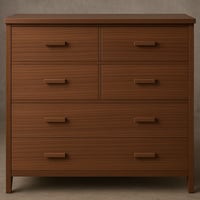
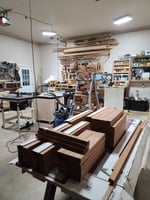
Look, I get it. You see a custom piece of furniture, your eyebrows shoot up at the price, and you...
So, You Want Furniture That Doesn't Secretly Hate You? Let's Talk Timber, Trends, and Telling the Difference.
Alright, pull up a stool. Let's talk about the lumps of wood and fabric you park your backside on. Commissioning furniture, or even just trying to buy something decent, can feel like navigating a minefield designed by overly enthusiastic decorators armed with confusing jargon and questionable taste. You nod along, pretending you know what "splayed legs" are, while secretly wondering if your budget stretches beyond something assembled with an Allen key and blind optimism.
Most folks think furniture is just… there. Background noise for life. But the chair you sit in, the table you eat off – they’ve got history, they've got attitude, and frankly, some of them are lying through their veneers. We're here to cut through the bull, decode the designer-speak, and figure out how to get something that doesn't just fill a space, but actually makes you quietly thrilled every time you look at it. Forget the glossy catalogues for a minute; let's talk brass tacks and Biedermeier (okay, maybe not Biedermeier, nobody needs that).
A Whirlwind Tour Through Furniture History (Faster Than a Flatpack Collapse)
Before everything came in a cardboard box with instructions seemingly written by a disgruntled gnome, furniture had some serious swagger.
Ye Olde Stuff: Thrones, Status, and Splinters
Think massive, carved monstrosities. Baroque furniture looked like it mugged a cathedral and ran off with the gilt – all about shouting "I'VE GOT LAND AND SERFS!" louder than a cannon blast. Then came the slightly more refined stuff, like Queen Anne with her curvy legs (the furniture's, mind you) – elegant, but still designed to impress the neighbours more than cradle your spine. Chippendale took leg-day seriously. It was all beautifully made by blokes who knew their wood, but let's be honest, comfort was often an afterthought, like garnish on a medieval feast. Opinion: Glorious craftsmanship, often hilariously impractical unless you lived in a castle and wore velvet pantaloons daily.
Machines March In: Progress or Just Faster Sawdust?
Then came steam, factories, and the idea that maybe everyone deserved a wobbly table, not just Lord Fauntleroy. Suddenly, furniture could be churned out. Some of it was decent, mimicking the old styles. A lot of it was… well, let's just say "built to a price." This sparked a counter-revolution – the Arts and Crafts lads. They took one look at the factory stuff, yelled "Bring back the hand-plane!", and started making beautifully honest, often chunky, pieces. Opinion: Noble effort, those Arts and Crafts folks. They worshipped honest work, but sometimes their furniture looked like it was designed by pious Vikings. Solid, worthy, occasionally about as subtle as a brick.
Wrestling Modern Styles: Beyond Beige Boxes and Warehouse Rust
Alright, fast forward past Art Deco's jazz hands and into the styles cluttering up your Pinterest feed and those giant furniture emporiums.
The Big Box Contenders: Predictable Comfort vs. Oversized Ambition
- Ethan Allen-esque: Think of it as the sensible sedan of the furniture world. Reliable, comfortable, unlikely to offend your Great Aunt Mildred. It’s well-made enough, often uses decent materials, but rarely whispers anything exciting. It's the furniture equivalent of vanilla ice cream – perfectly fine, but nobody's writing poems about it. Opinion: Safe. Sometimes depressingly so. If your pulse doesn't quicken even slightly, maybe aim higher?
- Restoration Hardware-ish: Oh boy. Big scale, lots of linen in shades of 'greige', and wood finishes that look like they survived a minor house fire. It makes a statement, usually involving how much space you have and your affinity for furniture that weighs more than a small car. Comfort can be hit-or-miss; sometimes those massive sofas feel like sitting on a beautifully upholstered shipping container. Opinion: Impressive heft, but often feels like a stage set for a movie about wealthy people contemplating their existential angst. Can lack soul beneath the engineered 'patina'. - Mid-Century Modern: More Than Just Skinny Legs
This isn't just your grandpa's hi-fi cabinet. Born from post-war optimism and a love affair with new materials and Scandinavian simplicity, MCM is about clean lines, organic shapes, and letting the materials sing. Think Eames Lounger (the holy grail), swooping chairs, and wood that knows its angles. Opinion: Genius when it's good (and often eye-wateringly expensive). But the cheap knock-offs? They often miss the point entirely, like a karaoke singer murdering Sinatra. Delicate, requires the right room, can feel a bit cold if you’re not careful. It's the cool kid who doesn't try too hard, which is precisely why it works. - Scandinavian: Hygge Hardware and Plywood Dreams
Think light woods (birch, ash), minimalist forms, functionality above all else, and a general air of calm, fjord-adjacent living. It’s the IKEA aesthetic’s sophisticated older sibling. It values simplicity, craftsmanship (often hidden), and making small spaces feel bigger and brighter. Opinion: Beautiful, clean, and deeply calming. But beware the slide into sterile blandness. Needs texture, plants, life to avoid looking like a dentist's waiting room designed by elves. Sometimes you want a chair that gives you a hug, not just politely acknowledges your existence. - Industrial: Exposed Bolts and Bruised Surfaces
Born from converting old warehouses into lofts where artists could freeze elegantly. Lots of raw metal, distressed wood (genuinely distressed, or beaten up in a factory), exposed workings. Think cast iron legs, old factory carts as coffee tables, lighting that looks vaguely dangerous. Opinion: Can be effortlessly cool and characterful, dripping with history (real or imagined). Or, it can look like you furnished your flat from a skip after a pub brawl. Needs a deft hand to integrate into a home without making it feel like an abandoned factory floor where tetanus is a complimentary accessory. - Modern Farmhouse: Shiplap Salvation or Signboard Overload?
Imagine a traditional farmhouse got a makeover from someone who really likes white paint and sliding barn doors (often where no barn ever existed). It's rustic-lite: cozy textures, nods to tradition (apron sinks, shaker cabinets), but cleaner lines and less actual mud. Opinion: Can be incredibly warm and inviting – a sort of idealized, Instagram-ready version of country living. But it teeters on the edge of becoming a twee parody, drowning in faux-distressed finishes and signs urging you to "Live, Laugh, Loaf." Needs authenticity, not just catalogue clichés.
Talking Shop: Slinging the Lingo Like You Own a Spokeshave
Want to commission something or just sound less clueless? Knowing a few terms helps cut through the fluff.
Wood Wisdom: Not All Trees Are Created Equal
Forget "wood colour." Think personality.
- Oak: The sturdy, reliable pint-drinker of the timber world. Strong grain, dependable, classic. Comes in white and red varieties – think of them as pale ale vs. bitter.
- Walnut: Dark, moody, sophisticated. The George Clooney of woods. Smooth, often with beautiful figuring. Costs a bit more, naturally.
- Maple: Pale, creamy, often harder than woodpecker lips. Can be understated or spectacularly figured (curly, birdseye). Tough stuff.
- Cherry: Starts pinkish-brown, ages to a rich reddish-brown like a well-loved library. Elegant, classic American choice. Bruises a bit easily in its youth.
- Ash: Tougher than it looks, often pale with a strong grain pattern like oak's more athletic cousin. Think baseball bats. Great for bending, too.
- Solid Wood vs. Veneer vs. The Questionable Stuff: Solid wood is just that – planks of the real deal. Veneer is a thin slice of pretty wood glued onto a less pretty (often cheaper, sometimes stable like plywood, sometimes sawdust-and-glue garbage like particle board) substrate. Opinion: Veneer isn't inherently evil – it allows for stunning patterns and can stabilize wild woods. But cheap veneer over cheap core? That's furniture pretending to be something it's not. Ask what's underneath.
Joinery Jargon: How It Sticks Together Matters More Than You Think
This is the grammar of furniture. Good joinery is strong, often beautiful, and shows someone cared. Bad joinery is why things wobble.
- Mortise and Tenon: A hole (mortise) and a peg (tenon) that fit together. Ancient, strong as an ox, the bedrock of quality construction. Like a proper handshake.
- Dovetails: Interlocking wedge-shaped pins and tails. Gorgeous, incredibly strong, usually seen on drawer sides. Opinion: If you see hand-cut dovetails, someone invested serious time and skill. It’s the furniture equivalent of bespoke tailoring. Machine-cut is good too, just less poetic. Staples and glue? That's fast fashion furniture.
- Dowels, Biscuits, Screws: Other methods. Dowels can be strong; biscuits are good for alignment. Screws are… functional. Opinion: Visible screws on a fine piece of furniture are like seeing the scaffolding still up on Buckingham Palace. Sometimes necessary, often a sign corners were cut.
The Finish Line: Not Just Pretty Polish
The finish protects the wood and dictates the look and feel.
- Oil Finish (like Tung or Linseed): Soaks into the wood, gives a natural, close-to-the-wood feel. Opinion: Beautiful, tactile, repairable. Like good skin. Needs occasional reapplication, like moisturiser. Doesn't offer bombproof protection.
- Varnish/Polyurethane/Lacquer: Forms a hard film on top of the wood. More protective against spills and scratches. Opinion: Tougher, like a raincoat. Can feel more plasticky, harder to repair invisibly if it gets damaged. Modern versions are way better than the old gloopy stuff.
- Paint: Opaque colour. Can be traditional (milk paint) or modern (sprayed lacquer). Opinion: Great for a specific look or reviving tired pieces. But covering beautiful solid wood grain with thick paint? Sacrilege, usually. Unless that's the whole point.
The Final Word: Buy Better, Commission Smarter, or Just Admire From Afar
Look, furniture isn't rocket science, but it's more than just picking something that matches the curtains. It's about materials that feel good, construction that lasts, and a style that resonates with you, not just some trend forecaster in Milan.
Now you're armed with enough jargon and opinion to hold your own. Ask questions. Poke the wood (gently). Wonder aloud why that joint looks like it was done with a butter knife. Find a maker whose work makes you nod and say, "Yeah, alright. They get it." Invest in something that feels right, that tells a story, that’ll hold your books, your dinner, your weary bones for years to come. Choose wisely, and you'll end up with something that brings you quiet joy long after the payment pain has faded. Go forth and furnish fearlessly. Or, you know, just have another pint and think about it. Your shout.